For porta potty rental San Jose producers can build a run-of-show around, the first question is headcount, hours and load-in window — not price per unit. A single standard unit for a weekend event generally lands in the $250 to $395 range in Santa Clara County, with a $250 on-site minimum on every order, and multi-station restroom trailers sit higher.
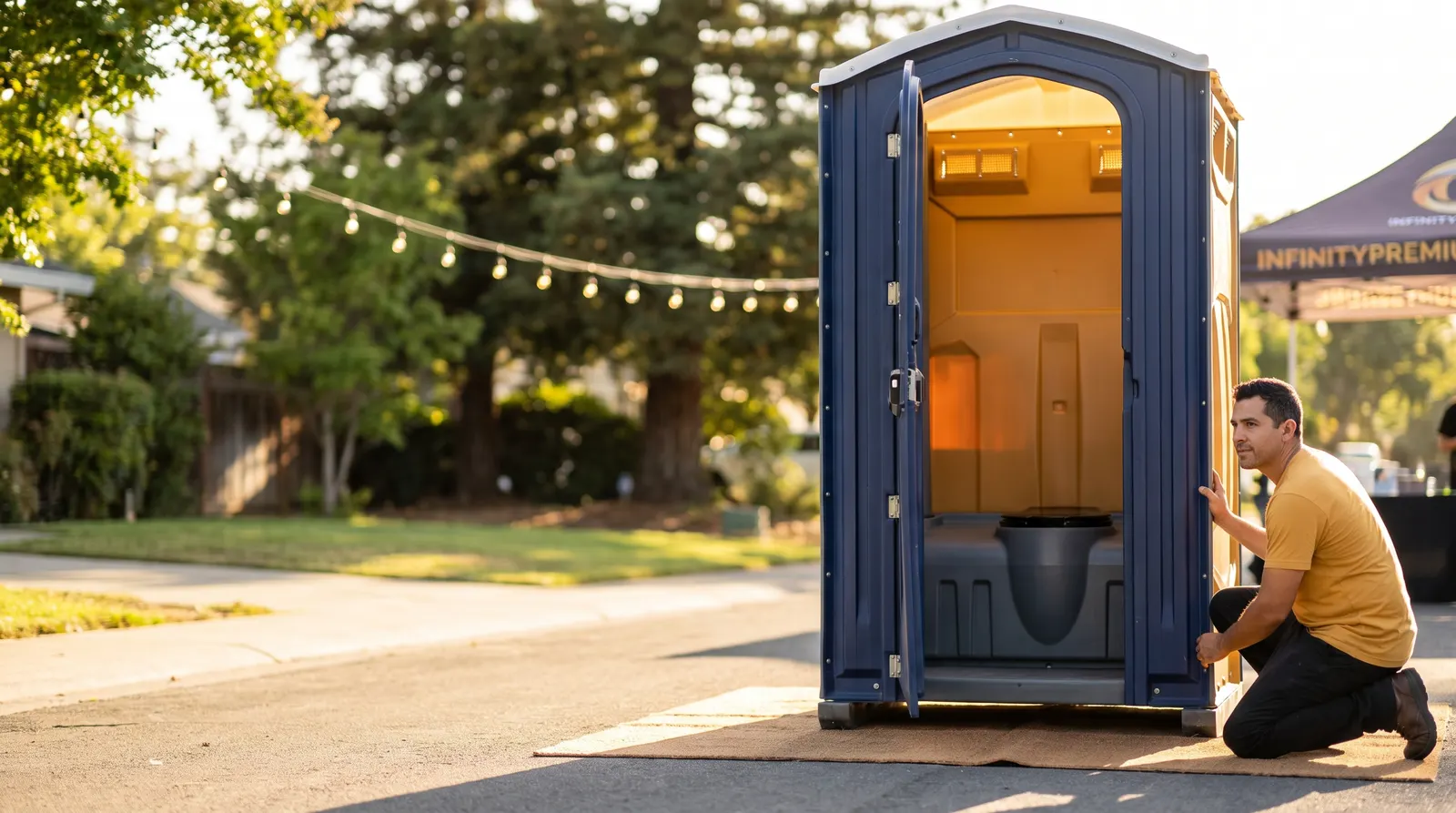
Porta potty rental in San Jose is the short-term or monthly placement of self-contained portable toilets — standard, flushing, ADA-accessible and trailer-mounted restrooms — at event sites, construction sites and private property across Santa Clara County, with delivery, a set servicing schedule and haul-away handled by the rental company.
Every service reflects the same meticulous attention to detail — whether it's a single job or a larger porta potty rental project across San Jose.
The workhorse unit for construction sites, block parties, park cleanups and backyard gatherings across San Jose. Each standard portable toilet is self-contained with a deodorized waste tank, a ventilation stack, an interior latch, a toilet paper holder and a translucent roof panel that lights the interior in daylight. Footprint is roughly 44 by 48 inches, so a unit fits in a single parking stall, on a gravel shoulder or on a firm patch of side yard. Standard units are the lowest cost per person served, which matters when the job is capacity rather than presentation — a 40-worker site off Monterey Road or a 150-guest quinceañera in Alum Rock. Delivery, scheduled servicing and haul-away are included in the rental; the crew does the lifting, the leveling and the pump-out.
Get a quote →A step up in guest experience without trailer infrastructure. Flushing deluxe units add a foot-pump flush, a freshwater handwash inside the unit and a mirror, so guests can wash and check themselves without leaving the door — the detail that separates a restroom guests tolerate from one they do not mention at all. Flushing units matter when guests are in formalwear or on site longer than four hours, which is why they are the common pick for Willow Glen backyard receptions, Rose Garden anniversary parties and outdoor weddings where the nearest indoor plumbing is inside the house. Like standard units, they need only firm, reasonably level ground and truck or hand-cart access, so they work on lots where a trailer cannot be parked.
Get a quote →Wheelchair-accessible units with a ground-level entry, a wide door, interior grab bars and a turning radius sized for a wheelchair. ADA units are the ones permit reviewers and venue coordinators ask about first, and public events in San Jose are routinely expected to include accessible restroom capacity in the restroom count rather than as an afterthought. The larger footprint changes placement: an ADA unit wants a flat, firm approach with no lip or step and a clear path back to the accessible route, which is easier on a paved lot near PayPal Park than on a sloped Almaden Valley lawn. Tell us the guest count and the accessible route on your site plan and we will place the unit where it actually serves people.
Get a quote →Multi-station restroom trailers for events where the restroom sits inside the guest sightline: plated dinners, corporate activations in North San Jose, venue weddings and upscale private parties. Trailers have separate men's and women's entries or private suites, porcelain fixtures, sinks with running water, interior lighting, climate control on many builds and a solid door that closes like a room. A trailer needs a level parking area about its own length plus tongue clearance, a 110V circuit or generator, and either a water hookup or a filled onboard tank. Because a trailer occupies real estate and needs a tow path in and out, siting is decided on a walkthrough — we mark the pad, the power run and the load-in route before the date, not on delivery morning.
Get a quote →Restroom planning for ceremonies and receptions in San Jose backyards, ranch venues and private estates, built around the timeline rather than the unit list. Guest count, ceremony start, dinner service and bar hours drive the count: one unit per 50 to 75 guests holds for a four-hour event, and alcohol service typically calls for roughly 30% more capacity because usage and dwell time both climb after toasts. Most wedding orders come out as flushing deluxe units or a trailer, one ADA unit, and placement downwind of dining and behind a fence line or hedge. Deliveries are scheduled the day before so nothing rolls in while the florist, rental company and caterer are stacking in the same driveway.
Get a quote →Multi-unit banks for street festivals, cultural events, race finishes and outdoor concerts around Japantown, downtown San Jose, Guadalupe River Park & Gardens and Lake Cunningham Regional Park. Large events get a placement map instead of a delivery address: two or more smaller banks split across the footprint so lines self-balance, one bank near the vendor and crew area, ADA units on the accessible route, and a service window scheduled between operating days on multi-day runs. Load-in language matters here — we work to your window, gate, and vendor stacking order rather than a vague morning-of arrival. Send the site plan, expected attendance, gate times and whether alcohol is served, and the count and layout come back as a written scope.
Get a quote →Job-site portable toilets for build-outs, remodels, tenant improvements and site work across San Jose and Santa Clara County. OSHA's construction sanitation rule is the working benchmark: one toilet for 20 or fewer workers, and one toilet plus one urinal per 40 workers. Units are placed where the truck can reach them for the life of the job — near the gate, off the crane radius, out of the concrete pour path — because a unit that gets fenced in behind stored material stops getting serviced on schedule. Weekly service is standard; twice-weekly is the right call during framing pushes, pours and trade stacking when headcount spikes for a few weeks.
Get a quote →Month-to-month rentals with a fixed service day, sized for long builds, ranch and orchard property, guest-house projects and ongoing site work in Berryessa, Evergreen, Alviso and North San Jose. Monthly rates cut the per-day cost sharply against short-term event pricing, and winter is the easiest window in San Jose to secure long-term units because event volume drops between November and February. Service includes pump-out, restocking and a wipe-down on each visit, and the unit stays on your site until you call for pickup. If the project stretches or pauses, the term flexes with it — tell us and the route adjusts.
Get a quote →Porta potty rental in San Jose is the short-term or monthly placement of self-contained portable toilets — standard, flushing, ADA-accessible and trailer-mounted restrooms — at event sites, construction sites and private property across Santa Clara County, with delivery, a set servicing schedule and haul-away handled by the rental company.
You get a firm, itemized quote for your porta potty rental before any work begins — no surprises, no pressure.
Careful prep, tidy work, and a full cleanup when we are done. We treat your home and belongings like our own.
The same trusted, background-checked team from the first call to the final check.
Start with the guest experience you are selling, then pick the hardware. If you want basic, high-throughput capacity for a construction crew, a park cleanup at Emma Prusch Farm Park or a neighborhood block party, choose standard units — roughly 44 by 48 inches of footprint, deodorized waste tank, ventilation stack, lowest cost per person served. If your guests are in formalwear at a Rose Garden or Willow Glen reception, choose flushing deluxe units instead: foot-pump flush, an in-unit freshwater handwash and a mirror change how a restroom reads to a guest at hour five of a wedding. If the event is a plated dinner, a corporate activation in North San Jose or a venue where restrooms sit inside the guest sightline, choose a restroom trailer — porcelain fixtures, interior lighting, sinks with running water and a solid door that closes like a room, not a box. The trade-off is infrastructure: a trailer needs a level parking area roughly its own length plus tongue clearance, a 110V circuit or a generator, and a water source or a filled onboard tank, while a standard unit needs nothing but firm ground.
Quantity is where most plans go wrong. One unit per 50 to 75 guests holds for a four-hour event with no bar; add a unit per additional 100 guests once you pass four hours, and add roughly 30% capacity when alcohol is served, because usage climbs and dwell time climbs with it. On job sites, OSHA's construction sanitation rule is the cleaner benchmark: one toilet for 20 or fewer workers, and one toilet plus one urinal per 40 workers. If your crew fluctuates, choose a monthly rental with weekly service. If the crew doubles during a pour or a framing push, choose twice-weekly service for those weeks rather than adding units you stop using. The trade-off is simple math: an extra service visit usually costs less than a second unit sitting idle, but a single overloaded unit on a 30-person site becomes the complaint nobody forgets.
On placement, if you want the shortest queue, split units into two smaller banks on opposite sides of the guest area rather than lining up one long row behind the catering tent. Two banks of three beat one bank of six at a 300-person festival because guests walk to whichever side is closer and the line self-balances. If you want the cleanest sightlines instead, choose a single bank set behind a hedge, a fence line or a scrim panel, downwind of dining and at least 50 feet from food service — the trade-off is a longer walk and a visible line at peak, usually the 20 minutes right after toasts or right after a headline set. If the site is a hillside lot in Almaden Valley or a gravel staging area off Monterey Road, choose standard units on a firm pad: they can be hand-carried into place and shimmed level, while a trailer simply cannot be sited on a grade.
Rental term follows the calendar, not the hardware. If you have a one-day event, choose a weekend rate — delivery Friday, pickup Monday, no mid-run service needed for a single-day guest count. If you have a multi-day festival or a three-day tournament at Lake Cunningham Regional Park, choose a scheduled overnight service between operating days so hour one of day two looks like hour one of day one. If you have a build that runs eight months in Berryessa or North San Jose, choose a monthly rental with weekly pump-out; the per-day cost drops sharply against short-term rates. The trade-off across all three is flexibility versus price: short-term rentals cost more per day and hold the truck's schedule for you, monthly rentals cost far less per day but commit the unit and the route.
Every project gets a firm, written price after a free on-site visit. Ranges below for orientation.
Tell us about your porta potty rental job and we'll send a clear, written quote — usually the same day. Or just call and talk to a real San Jose pro.
(619) 604-0688
San Jose sites split into three access problems, and the placement plan changes with each one. Willow Glen and Japantown streets are narrow with tight driveways and permit parking, so a single unit often has to be hand-carted through a side gate rather than set from the truck — a 40-foot path and a 34-inch gate are the numbers that decide it. Almaden Valley and the hillside edges above Alum Rock Park bring grade: standard and flushing units can be shimmed level on a firm pad there, while a restroom trailer needs flat ground and cannot be sited on a slope. Alviso and the low-lying ground toward the bay stay soft well into spring, and turf near Guadalupe River Park & Gardens gives under weight after rain, so units get set on plywood or on a paved edge instead of open grass. Public events downtown, at PayPal Park's surrounding lots and near San Jose State University run on tight load-in windows shared with vendors, staging and inspectors, which is why we work to your gate time and marked pad rather than a vague morning-of arrival. Peak demand across the city runs May through September, construction volume climbs in spring as the rainy season ends and holds through October in North San Jose and Berryessa, and September and October festival season generates most of the short-notice calls — so a two-to-four week booking window, or three to four weeks for Memorial Day, Fourth of July and Labor Day, is the practical rule here.
Free estimates for San Jose & the surrounding area.
 InfinityPremium Festival Toilets