Sizing starts with headcount and hours, not with a price sheet. OSHA's construction sanitation standard sets ratios by worker count — a single toilet covers a small crew, while larger crews require additional seats —…
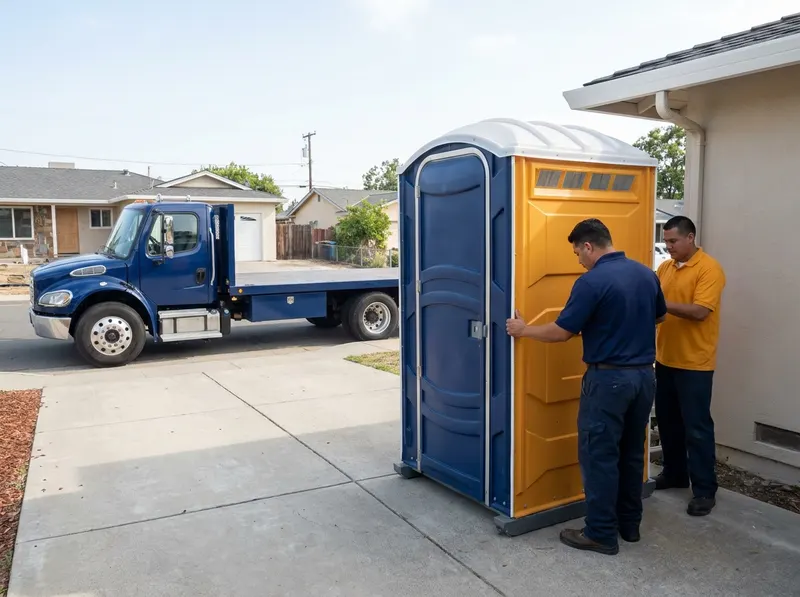
Sizing starts with headcount and hours, not with a price sheet. OSHA's construction sanitation standard sets ratios by worker count — a single toilet covers a small crew, while larger crews require additional seats — and inspectors ask about it. Our practical planning number for San Jose jobsites is one serviced unit per 10 workers on a 40-hour week, with service frequency stepped up rather than units added when a site runs six days or double shifts. A drywall and paint phase with 25 trades on deck is a different sanitation load than a two-person foundation crew in Cambrian Park, and the schedule should change when the phase changes, not three weeks later.
Access decides placement more than anything else in this city. In North San Jose, the Golden Triangle campus buildouts usually have room to set units inside the fence line with straight hose reach from the truck; in Willow Glen, ADU and second-story additions behind Lincoln Avenue often mean a narrow driveway, a single gate and a unit that has to sit near the curb so the pump line can reach without crossing a neighbor's lawn. Hillside lots off Alum Rock and up in Almaden Valley need level pads and grade-aware placement so a unit is not sitting on a slope for six months. Out in Alviso, soft shoulders and levee-adjacent access roads near Gold Street can turn to mud after a wet week, so we place close to firm ground rather than deep in the site. Berryessa corridor work, Japantown mixed-use infill and Evergreen and Rose Garden remodels all tend to involve street staging and neighbors within earshot, which is a good argument for a screened placement and a tighter service interval.
Choose a construction unit when the users are your own crew and trades: it is the right tool, priced for duration, and it handles daily abuse. Choose an event restroom trailer or a fresh-water flush unit instead when the people using it are clients, inspectors on a VIP walkthrough, a topping-out event or a homeowner living on-site during a Santa Clara County remodel — the trade-off is real, since trailers need level ground, more footprint and often power, and they cost meaningfully more per week. Many long-run sites do both: standard units by the material laydown area, one upgraded unit near the trailer office.
The two failure modes that actually hurt a schedule are undersized sanitation during peak trade stacking and a service truck that misses its route. We plan around both by fixing your service day in writing and adjusting the interval when your headcount jumps, and by asking about gate codes, lockbox access, dumpster placement and inspection days before the first delivery. ADA-accessible units are available where site conditions and path-of-travel allow, and handwash stations pair with them for concrete, demo and food-adjacent work. Pricing is discussed after scope, and the numbers below are honest market ballparks — the exact figure is confirmed on a free on-site visit.
Every job gets a firm, written price after a free on-site visit.
Tell us about your construction site portable toilet rental job in San Jose and we'll send a clear, written quote — usually the same day.
 InfinityPremium Festival Toilets