A holding tank earns its place when the restroom fixture is right but the plumbing isn't. Restroom trailers carry onboard waste capacity sized for a certain number of flushes — pass that number and the trailer stops…
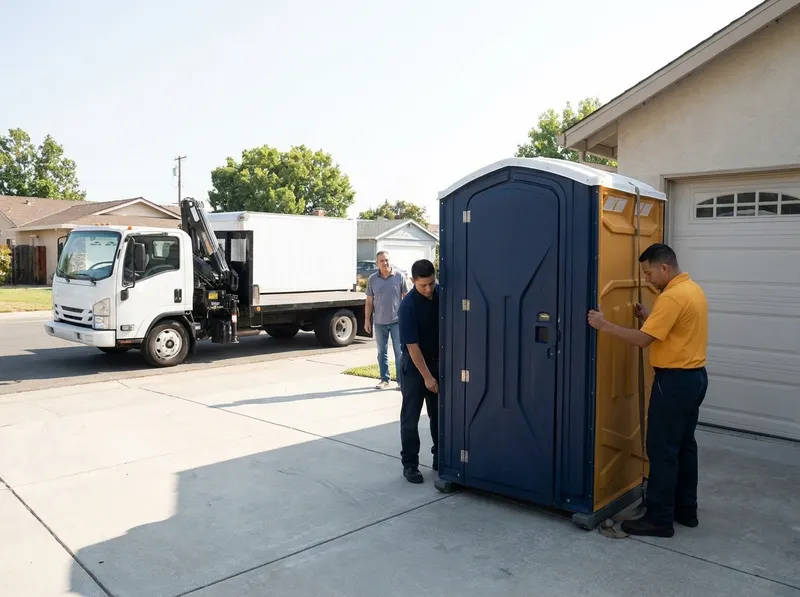
A holding tank earns its place when the restroom fixture is right but the plumbing isn't. Restroom trailers carry onboard waste capacity sized for a certain number of flushes — pass that number and the trailer stops being an asset. Adding an external tank extends duration without adding footprint, which matters at sites like the paved lots around PayPal Park or a Japantown street closure where every linear foot is committed to vendors, barricade line and fire lane. The alternative is more units: another trailer or a bank of standard restrooms. More units add capacity and shorten queues; a tank adds duration and independence from sewer, nothing else. If your ratio math already works for the headcount and you simply need it to hold for 10 hours across two days, the tank is the cheaper and quieter fix. If guests are stacking three deep at intermission, you need fixtures, not gallons.
San Jose geography drives a lot of these orders. Sites along the Guadalupe River Park & Gardens trail corridor, the levee-side flats in Alviso and the foothill picnic areas at Alum Rock Park have no practical sewer tie-in within hose reach, so anything with a drain needs somewhere for that water to go. Hillside properties in Almaden Valley and pockets above Cambrian Park often run on septic systems that a wedding caterer's dish sink should not be introduced to — a greywater tank keeps the day's wash water out of a leach field the homeowner has to live with in July. In North San Jose, tech-campus activations sit on asphalt with storm inlets every few hundred feet, and storm drains are not a legal disposal point for vendor wash water anywhere in Santa Clara County. Festival and market work at Emma Prusch Farm Park and Lake Cunningham Regional Park tends to be the reverse problem: plenty of open ground, long service days, and food vendors who each generate more greywater than they expect.
Placement is the detail that decides whether the rental works. The tank needs level, firm ground within hose distance of the fixture it serves, and the vacuum truck needs to reach it — typically within about 100–150 feet of drivable access, with the route clear of vendor tents, generator cable and rented flooring. We map that before the drop rather than discovering it during service, and we schedule the pump-out inside your run-of-show: overnight between show days, during a set change, or before doors instead of during peak. On multi-day builds in Berryessa, Evergreen, Willow Glen, Rose Garden or Alum Rock, that usually means one service pass per day at a fixed time your production manager can put on the schedule.
Sizing is a headcount and hours calculation, not a guess. Guest count, event duration, alcohol service, whether food vendors are washing dishes on site, and the trailer's onboard capacity all feed into gallons per day; ADA fixtures and handwash stations add their own load. Tell us those numbers on the phone and we will tell you the tank size and how many pump-outs the schedule needs — then confirm both on a free on-site walkthrough, where we can see the access route, the ground and the distance to your restroom placement. The quoted figure stays a ballpark until that visit, because access is what actually moves the price.
Every job gets a firm, written price after a free on-site visit.
Tell us about your portable holding tank rental job in San Jose and we'll send a clear, written quote — usually the same day.
 InfinityPremium Festival Toilets