A standard unit is the right call when the restroom does not need to be part of the guest experience. Construction crews in North San Jose, film and photo units staging along the Guadalupe River Park trail corridor,…
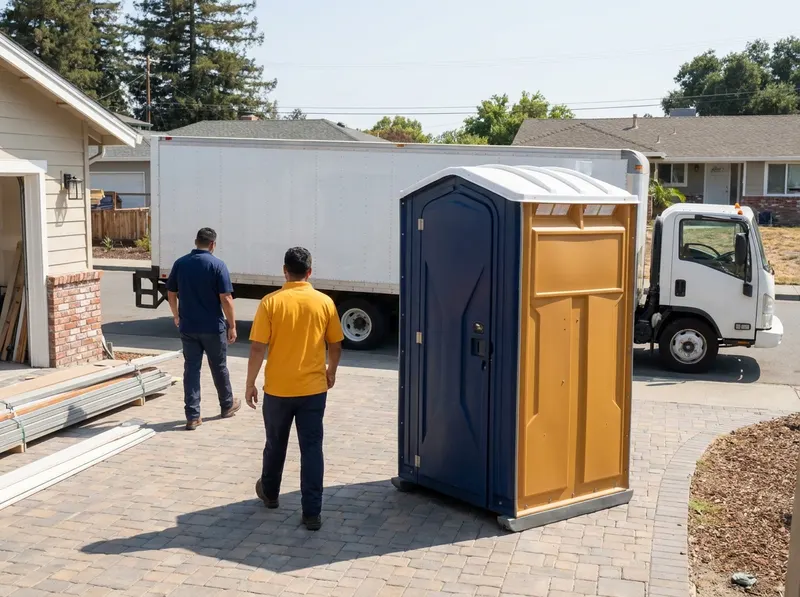
A standard unit is the right call when the restroom does not need to be part of the guest experience. Construction crews in North San Jose, film and photo units staging along the Guadalupe River Park trail corridor, vendor and volunteer areas at Emma Prusch Farm Park, park picnic reservations near Alum Rock Park, and neighborhood block events on the residential ends of Willow Glen and Cambrian Park are all standard-unit territory. For crew, back-of-house and overflow, standard units are the most cost-efficient way to add capacity without touching your production budget for guest-facing amenities. Where the trade-off appears is at the front of house: a standard unit has no sink basin, no interior lighting unless we add it, and no climate control. If your guests are in cocktail attire at a Rose Garden or Almaden Valley wedding, the honest recommendation is a restroom trailer for guests and standard units for staff — a mix, not an either/or.
Headcount math is where most orders go wrong, and it is the first thing we work out with you. A common event planning baseline is one standard unit per 50–75 guests for a four-hour event, with capacity added when alcohol is served or the event runs past six hours. A 300-guest, five-hour festival with beer service is a different order than a 300-guest daytime school function, and a 12-person framing crew on a six-month schedule is a different order again. Tell us hours of use, whether food and drink are on site, and whether the schedule has a hard peak — intermission, ceremony end, gates open — and we size to the peak, not the average. ADA-compliant units are a separate unit type and are sized separately; if your permit or venue agreement requires accessible provision, say so on the first call so it lands on the placement map from the start.
San Jose site conditions decide placement more than anything else. Alviso deliveries need a route check first — the roads out toward the levees and the sloughs are narrow, soft-shouldered and seasonally wet, and a service truck that cannot turn around cannot service the unit later. Almaden Valley hillside driveways and tight Japantown side streets off Jackson and Fifth need a truck-length conversation before we commit to a window. Downtown blocks near San Jose State University and the one-way grid around PayPal Park require load-in timing that respects campus schedules and matchday traffic, so we schedule those drops early rather than fighting the street. Berryessa and Evergreen job sites are usually straightforward, but we still want the unit within reach of the service truck's hose and away from where the next trade will be staging material, because a unit that gets fenced in becomes a unit nobody can pump. If your Santa Clara County permit, HOA or venue requires a placement diagram, we produce one.
Service frequency is the other half of the rental, and it is the part cheap quotes quietly leave out. Weekly service is the standard interval for job sites; multi-day events and high-traffic single days often justify a mid-event or overnight service visit. Pumping, restocking paper and sanitizer, and wiping down interior surfaces takes a few minutes per unit and is the entire difference between a restroom guests tolerate and one they complain about. We will tell you plainly when a second unit costs less than a second service trip, and when it is the other way around. Nothing is quoted below the $250 minimum, and every number we give before seeing the site is a ballpark — the exact figure is confirmed on a free walkthrough. Call (619) 604-0688 with the date and we will start with the placement map.
Every job gets a firm, written price after a free on-site visit.
Tell us about your standard portable toilet rental job in San Jose and we'll send a clear, written quote — usually the same day.
 InfinityPremium Festival Toilets